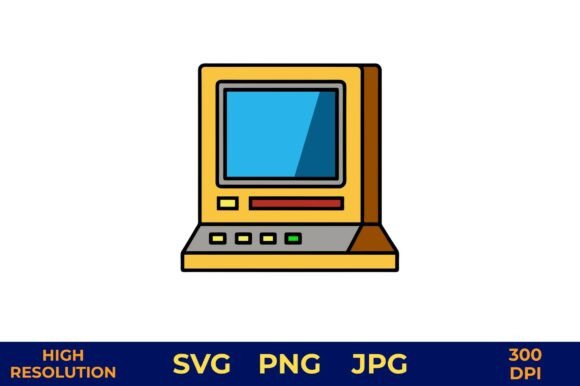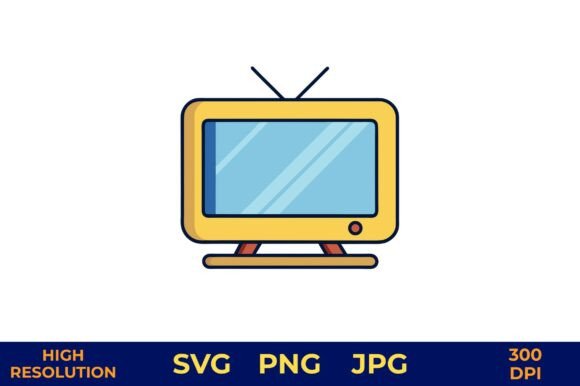
Retro TV Vector Design with Blank Screen
As a designer who spends half my life staring at digitized stitch files and the other half troubleshooting why a specific thread color looks muddy on cotton, I approach every new asset with a healthy dose of skepticism. The market is flooded with clip art that looks beautiful on screen but falls apart under the needle. That is why I decided to put Retro TV Vector Design with Blank Screen through its paces. This isn't just another generic illustration; it is a piece of Illustrations and Graphics that demands to be translated into textile form. Here is my honest evaluation of how this vintage yellow television vector performs when moved from a digital workspace to a real-world embroidery project.
The First Impression: Nostalgia Meets Clean Lines
The moment you load this file, the visual personality jumps out at you. It captures that mid-century modern aesthetic without being overly cluttered. The subject—a vintage television set with prominent antenna and a distinct blank screen—offers a unique canvas for creativity. For an embroiderer, the "blank screen" is not a limitation; it is an opportunity. It allows the maker to decide what goes there, or simply lets the background fabric speak, which is crucial for maintaining high contrast in stitching.
The mood is warm, inviting, and slightly playful. The bright yellow casing stands out against almost any neutral backdrop, making it an excellent choice for brands that want to evoke a sense of fun and retro charm. Unlike complex photographic designs that require hundreds of color changes, this vector-based structure relies on bold shapes and clean curves. This simplicity is often where true quality lies in a machine embroidery design. If the underlying vector doesn't have good geometry, the digitization will struggle. In this case, the lines are crisp, suggesting that the resulting embroidery file will stitch cleanly with minimal puckering.
Real-World Application: From Tote Bags to Nursery Decor
I recently considered using this design for a batch of custom embroidered tote bags intended for a local craft fair. The concept was simple: a sturdy canvas bag featuring this retro TV, perhaps with a small phrase stitched inside the "screen" area. The result would be a perfect blend of utility and style. Because the design is isolated on a white background in its source format, it translates easily to various handmade product categories.
This design is versatile enough for several different niches:
- Custom Apparel: A sweatshirt embroidery on the chest or back of a hoodie creates a statement piece. The yellow pops beautifully against navy, black, or heather grey fabrics.
- Baby Embroidery: Imagine this on a muslin blanket or a onesie. The soft, rounded edges of the TV set make it safe and appealing for nursery decor. It fits perfectly into a "retro kids" theme.
- Kitchen & Home: An embroidered patch on a kitchen towel or a tea towel brings a cozy, vintage vibe to a modern kitchen. It serves as a great personalized gift for housewarmings.
- Craft Business Items: For the Etsy seller or small shop owner, this design offers high perceived value. It looks professional and intentional, which helps build customer trust and brand consistency.
When customers see a finished product like an embroidered patch or a tote bag design that feels cohesive and well-executed, they are more likely to engage with the brand. This design supports that professionalism by providing a strong focal point that doesn't compete with other elements on the garment.
Technical Considerations for Stitching Success
While the visual appeal is undeniable, practical execution requires careful planning. Not all surfaces are created equal, and this design has specific strengths and weaknesses depending on where you place it.
Where It Shines
The solid yellow body of the TV works exceptionally well with fill stitch techniques. When executed correctly, a dense fill stitch gives the design a luxurious, textured feel that mimics the glossy plastic of a vintage TV. The antenna lines can be rendered with a tight satin stitch or a series of precise running stitch lines, adding fine detail without overwhelming the viewer. This balance between large filled areas and thin linear details is exactly what makes a digital embroidery file successful.
Areas Requiring Caution
However, there are scenarios where this design might need adjustment. If you plan to stitch this onto a curved surface like a baseball cap, the flat nature of the TV’s front face might distort if the hoop tension isn’t perfect. Similarly, on stretchy fabric like jersey knits, the heavy fill stitches could cause warping. Always use a proper stabilizer—cut-away for stretchy materials—to keep the shape intact.
Another critical factor is thread colors. The yellow must be vibrant. On dark fabric, you may need to add an underlay or a backing layer to ensure the yellow doesn’t look dull. Conversely, on very light fabrics, ensure the white of the screen contrasts enough with the surrounding material if you intend to leave it unstitched. Testing the design in a black-and-white mockup before committing to expensive threads is a smart move to check contrast levels.
Practical Designer Notes for Commercial Use
If you are a commercial embroidery artist or a creative entrepreneur looking to sell finished items, you must verify the licensing terms. While the source is described as a high-quality graphic, commercial rights vary. Ensure you have permission to create and sell physical products derived from this design assets pack.
Before mass production, always test the design on scrap fabric first. Check the stitch density; if the stitches are too close together, the fabric may pucker. If they are too sparse, the stabilizer might show through. Inspect the small details, such as the knobs and the antenna tips. These tiny elements can get lost if the hoop size is too small relative to the design scale. I recommend starting with a medium-sized hoop to capture the full character of the TV without losing definition.
Furthermore, consider the end-user experience. A finished product that is comfortable to wear or use is one that sells. Avoid placing heavy embroidery blocks directly over pressure points, such as the center of a t-shirt back or the seam of a hat. Positioning the design on the upper left chest or centered on a tote bag ensures both aesthetic balance and wearer comfort.
Final Verdict
Retro TV Vector Design with Blank Screen is a standout asset for anyone looking to add a touch of vintage flair to their embroidery project. Its clean lines, nostalgic theme, and adaptable layout make it suitable for a wide range of applications, from holiday embroidery gifts to boutique branding. By paying attention to fabric choice, stabilizer support, and thread selection, you can transform this vector into a stunning custom apparel item that stands out in a crowded marketplace. It is a reliable, visually engaging tool that respects the craft of embroidery while offering endless creative possibilities.