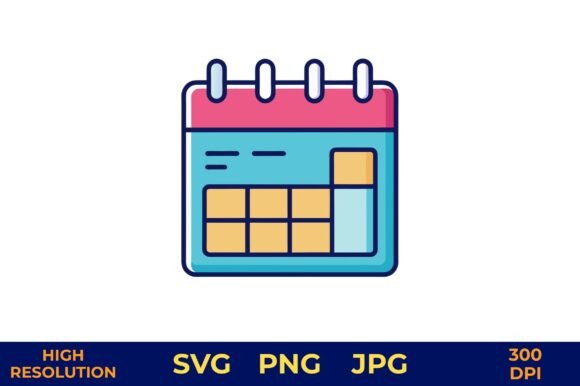
Retro Desk Calendar Vector Illustration
As a designer who spends half her life staring at stitch charts and the other half trying to make sure clients are happy with their finished products, I approach every new digital asset with a healthy dose of skepticism. The market is flooded with "pretty" graphics that look great on a screen but fall apart under the needle. That is why I took Retro Desk Calendar Vector Illustration for a spin—not just to look at it, but to evaluate its potential as a viable machine embroidery design for real-world applications.
The immediate first impression is one of vibrant nostalgia. The graphic features a bright retro desk calendar with solid outlines and vivid colors. It screams mid-century modern charm, which is currently having a massive moment in the handmade community. But does it translate? Can a flat vector illustration survive the transition from a transparent background to a piece of fabric without losing its soul? Let’s dig into the practicalities of using this Graphics asset for your next embroidery project.
The Vibe: Nostalgia Meets Modern Craft
The mood of Retro Desk Calendar Vector Illustration is undeniably cheerful and organized. For an Etsy seller or small shop product creator, this visual personality is gold. It suggests productivity, planning, and a touch of whimsy. When you imagine this design stitched onto a canvas tote bag or a linen apron, it doesn’t feel like a generic clip art; it feels like a statement piece.
From a design perspective, the solid outline is crucial. In the world of machine embroidery, clean lines help maintain structural integrity. A complex, watercolor-style gradient might blur into a muddy mess depending on your thread count, but a bold, defined shape holds its form better. This makes the file a strong candidate for custom apparel where clarity is king. It works beautifully as a tote bag design for teachers, office workers, or anyone who appreciates a bit of vintage flair in their daily routine.
Real-World Application: Where Does It Fit?
I often think about how a design will age and wear before I commit to stitching it. Retro Desk Calendar Vector Illustration has several natural homes in the handmade space. Here is where I see it shining:
- Personalized Gifts: This is perhaps the strongest use case. Imagine a custom embroidered patch featuring this calendar attached to a leather planner cover or a notebook sleeve. It adds a personal, thoughtful touch that mass-produced items lack.
- Kitchen and Home Decor: Embroidered tea towels and kitchen aprons are staples for craft fairs. The colorful nature of the design pops against white or cream cotton, making it an eye-catching handmade product. It also works well on pillow covers for a nursery or a home office, adding a splash of color without overwhelming the room.
- Holiday and Seasonal Merchandise: While not strictly holiday-themed, the retro aesthetic fits perfectly with Christmas gift-giving seasons. Think of it as part of a "New Year, New You" collection. A sweatshirt embroidery featuring this motif could be a hit during winter months when people are looking for cozy, motivational gear.
- Baby Items: If simplified slightly, the shapes could work for baby clothes or blankets. The bright colors are stimulating for infants, and the theme of "time" or "days" can be interpreted playfully for a child’s room decor.
The Technical Reality Check
This is where my role as a reviewer becomes critical. Just because a vector looks good on a monitor doesn’t mean it will stitch well. Here is what you need to consider when converting this Illustrations file into an embroidery file.
Stitch Density and Detail: The original description mentions vibrant colors and solid outlines. If you plan to use fill stitches to recreate the colored blocks, you must check the stitch density. Too dense, and the fabric will pucker; too sparse, and the backing material will show through. For a design like this, a combination of satin stitches for the borders and lighter fill stitches for the interior areas is usually the safest bet. Always test on scrap fabric first to ensure the threads lay flat.
Fabric Compatibility: This design requires a stable base. It performs best on medium-weight fabrics like denim, canvas, or tightly woven cotton. Avoid stretchy knits unless you are using heavy-duty stabilizer, as the tension of the running stitch or fill stitch can distort the image. Similarly, textured fabrics like terry cloth or boucle will hide the details of the calendar, so stick to smooth surfaces for maximum impact.
Color Contrast: The success of any commercial embroidery project relies on contrast. Since the vector uses vibrant colors, you have flexibility in choosing your thread colors. However, if you are stitching on dark fabric, you will need to apply a cut-away stabilizer or use a white underlay to prevent the bright threads from disappearing into the background. Always inspect small details in black-and-white mockups to ensure readability.
Practical Designer Notes for Success
To get the most out of Retro Desk Calendar Vector Illustration, keep these tips in mind before you start your production run:
- Hoop Size Matters: Ensure the final digitized size fits within your standard hoop sizes. If the design is too large, it may require multiple hooping attempts, which can lead to alignment issues.
- Check Licensing: Before listing this as a digital product preview or selling finished goods, confirm the licensing terms. Some vectors allow commercial use for physical items but restrict resale of the digital file itself.
- Test Print Mockups: Use printable mockups to visualize the design on different products. This helps you gauge customer reaction and ensures the scale is appropriate for items like caps or hats, where curved surfaces can distort straight lines.
- Stabilizer Selection: Use the proper stabilizer for your fabric type. For delicate materials, a tear-away might suffice, but for durable goods like aprons or totes, a cut-away stabilizer provides lasting support.
Final Verdict
Retro Desk Calendar Vector Illustration is a versatile and visually appealing asset that bridges the gap between digital art and tactile craftsmanship. Its retro charm and clear structure make it suitable for a wide range of projects, from personalized gifts to boutique branding. While it requires careful attention to stitch density and fabric choice, the payoff is a professional-looking finished product that stands out in a crowded marketplace.
For creative entrepreneurs and makers looking to add a touch of vintage style to their inventory, this design is a smart investment. It offers high visual impact with manageable technical requirements, provided you respect the basics of embroidery engineering. Whether you are creating a single personalized gift for a friend or building a line of craft business merchandise, this illustration has the potential to elevate your work and engage buyers who appreciate quality and design intelligence.
In short, it is more than just a pretty picture; it is a functional tool for designers who want to create meaningful, wearable, and usable art. If you are ready to bring some retro flair to your studio, this vector is definitely worth exploring.