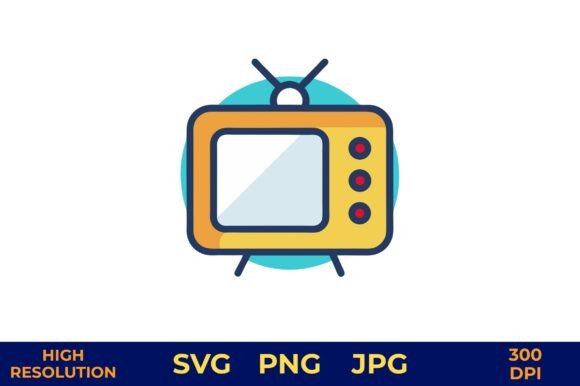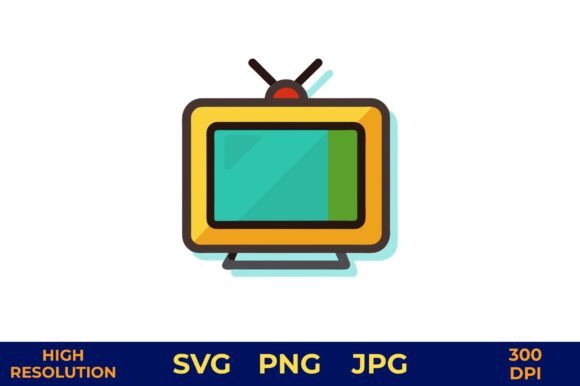
Retro TV Icon in Vector Style
As a designer who spends half my life staring at stitch charts and the other half trying to convince clients that "simple" is actually hard to execute well, I approach every new Illustrations download with a healthy dose of skepticism. We have all been there: you find a cute graphic, buy the file, pop it into your embroidery software, and suddenly realize that what looked like a charming icon on screen is going to turn into a tangled mess of thread on fabric. That is why I decided to put Retro TV Icon in Vector Style through its paces before recommending it for your next embroidery project.
This isn't just about whether the design looks cool; it is about whether it survives the needle. The product description highlights a vintage television set vector illustration isolated on a white background. For those of us in the craft business, this simplicity is both a blessing and a challenge. It gives us room to work, but it also means we cannot hide behind complex patterns or busy backgrounds to mask poor execution.
First Impressions and Visual Personality
The moment you open the file, the mood is instantly established. This is not a hyper-realistic attempt to recreate a 1950s console; it is a stylized, iconic representation. The clean lines and geometric shapes suggest a modern take on nostalgia. For an embroidery designer, this clarity is vital. When translating a vector to a digital embroidery file, sharp angles and distinct silhouettes tend to hold up better than organic, fuzzy edges.
The visual personality here is playful yet grounded. It feels like something that belongs in a mid-century modern kitchen or a trendy boutique clothing store. It has that specific charm that appeals to the millennial and Gen Z demographic who love retro aesthetics but want them presented in a contemporary way. If you are looking to create custom apparel that speaks to someone’s inner hipster or their love for analog media, this design hits the right note without being overly literal.
Real-World Application: The Tote Bag Test
To truly evaluate any machine embroidery design, you have to imagine it on a physical object. Let’s talk about a scenario I encounter constantly: creating a custom embroidered tote bag for a local artisan market or an Etsy listing. A canvas tote is a classic choice, but it is also a unforgiving surface. The fabric is often thick, textured, and prone to shifting if not stabilized correctly.
I envision placing the Retro TV Icon in Vector Style centered on a natural canvas tote. Because the design is isolated and relatively compact, it works beautifully as a standalone statement piece. It doesn’t need surrounding text or elaborate borders to make an impact. However, the success of this placement depends entirely on thread color selection. On a light canvas, using a dark navy or charcoal thread for the TV body would create striking contrast, while bright orange or yellow accents for the dials would pop vibrantly. On a black tote, you would need to be more careful, perhaps using metallic threads or lighter pastel shades to ensure the details remain visible.
This same logic applies to sweatshirt embroidery. A cropped hoodie in heather grey with this design stitched on the chest offers a casual, streetwear vibe. The rounded corners of the vintage TV mimic the softness of the knit fabric, creating a harmonious texture relationship. It feels intentional, not just slapped on.
Where to Exercise Caution
No design is perfect for every situation, and Retro TV Icon in Vector Style is no exception. There are specific contexts where this design might struggle, and knowing these limitations is what separates a professional from a hobbyist.
- Small Hoop Sizes: If you plan to digitize this for a very small hoop (under 4x4 inches), you must inspect the small details closely. The knobs and antenna elements can become muddy if the stitch density is too high or if the individual stitches are too large relative to the feature size. Always test in black and white mockups to check legibility at scale.
- Textured Fabrics: While great on smooth cottons and canvases, this design may get lost on heavily textured fabrics like bouclé or heavy tweed. The fine lines of the vector style require a relatively flat surface to maintain its crisp identity.
- Stretchy Fabrics: If you are working with thin jersey knits for baby embroidery or lightweight t-shirts, you must use proper stabilizer. Without adequate support, the tension of the fill stitch areas could pucker the fabric, distorting the shape of the TV and making it look sloppy rather than stylish.
- Dense Stitch Areas: Check the stitch density in your software. If the fill areas are too dense, the finished product will feel stiff and cardboard-like, which is undesirable for items like aprons or kitchen towels that need to remain flexible and functional.
Stitching Clarity and Product Value
When executed well, Retro TV Icon in Vector Style significantly boosts the perceived value of a handmade product. Customers associate clean stitching with professionalism and care. A well-stitched TV icon suggests that the maker paid attention to detail, which builds trust and encourages repeat purchases. It transforms a generic commodity into a personalized gift or a unique small shop product.
The design’s versatility allows it to fit into various niches. It works perfectly for holiday embroidery as a nostalgic Christmas decoration, especially when paired with warm reds and greens. It fits seamlessly into nursery decor as part of a media-themed gallery wall, provided the colors are softened to pastels. For commercial embroidery projects targeting tech-savvy audiences or retro enthusiasts, this design serves as a strong visual anchor.
Practical Designer Notes for Success
Before you commit to a full production run, follow these steps to ensure your finished product meets industry standards:
- Test on Scrap Fabric: Never assume how a design will behave until you see it stitched. Use the exact fabric and stabilizer combination you plan to use for the final item.
- Review Thread Color Contrast: Ensure the thread colors provide enough contrast against your fabric. Low contrast can make the design look dull or invisible.
- Inspect Small Details: Zoom in on the digitized file. Are the running stitches long enough to break? Are the satin stitches wide enough to cover the base fabric completely?
- Check Licensing: Confirm whether the digital embroidery file license allows for commercial use. If you are an Etsy seller or small business owner, selling finished items made from this design requires explicit permission. Do not guess; read the terms.
- Create Printable Mockups: Before investing time in stitching, create a few printable mockups. Place the vector image onto photos of tote bags, shirts, and pillows. This helps you visualize the final aesthetic and marketing materials without wasting thread.
Final Verdict
Retro TV Icon in Vector Style is a solid, versatile asset for any designer’s library. It avoids the pitfalls of over-complication while offering enough character to stand out in a crowded marketplace. Its strength lies in its adaptability—it can be scaled, recolored, and placed on a variety of substrates with predictable results.
For those looking to expand their range of design assets or add a touch of vintage flair to their handmade products, this is a smart addition. Just remember that the quality of the final output depends heavily on your preparation, your machine settings, and your choice of materials. Treat it with respect, test thoroughly, and you will likely find that this little TV becomes one of your best-selling designs.