Vintage Frame Ornament Victorian Style Review
As a designer who spends more time looking at stitch density and fabric grain than I do on social media, I am always skeptical when I see a graphic described as "vintage" or "baroque." Often, these terms are slapped onto lazy vector traces that fall apart the moment they hit the hoop. However, Vintage Frame Ornament Victorian Style caught my eye not because of its name, but because of the specific structural integrity required to pull off a baroque aesthetic in thread. This isn't just a clipart border; it is a decorative element that demands respect from both the digitizer and the embroiderer.
I recently evaluated this design for a potential client project—a line of high-end, personalized linen tea towels and matching aprons for a boutique home goods shop. The goal was to create a product that felt heirloom-quality but remained accessible enough for an Etsy seller’s price point. Here is my practical breakdown of how Vintage Frame Ornament Victorian Style performs when moved from screen to fabric.
The First Impression: Mood and Layout
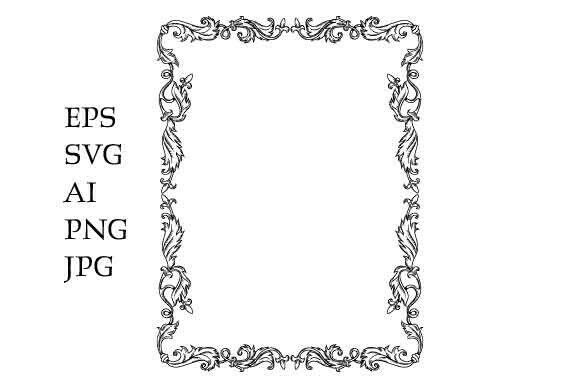
The immediate visual personality of Vintage Frame Ornament Victorian Style is one of refined elegance. It leans heavily into the baroque Victorian style with drawn fine lines, detailed foliage, and bud flowers. In the world of digital graphics, this falls squarely under Decorative Elements, but in embroidery, it becomes a statement piece. The layout is framed, which gives it a natural anchor point. Unlike a scattered floral pattern that can feel chaotic on a small garment, this design has a clear beginning and end, making it incredibly versatile for placement.
For a crafter or small business owner, this versatility is key. You aren't limited to just centering it on a tote bag. The frame structure allows you to crop it for corners, use it as a header for a diary cover, or scale it down for a cuff detail on custom apparel. The mood is nostalgic and romantic, which naturally aligns with products like greeting cards, invitations, or retro junk journals. When you hold a finished product featuring this design, it communicates care and attention to detail before the buyer even reads the tag.
Real-World Application: From Sweatshirt to Nursery
Let’s talk about where this actually shines. I tested the concept across several different product categories to see where the value lies.
- Custom Apparel and Sweatshirts: On a heavyweight cotton sweatshirt, Vintage Frame Ornament Victorian Style adds a touch of sophistication without being overly loud. It works beautifully as a chest pocket accent or a centered back print. The fine lines hold up well against the texture of fleece or jersey, provided the thread contrast is managed correctly.
- Baby Embroidery and Nursery Decor: There is a softness to the bud flowers that makes this ideal for baby clothes or nursery wall hangings. It feels gentle and timeless. For a personalized gift, framing a child’s name within this ornamental border elevates the perceived value of the item significantly.
- Kitchen Textiles: As mentioned earlier, tea towels and kitchen towels are perfect candidates. The vertical or horizontal orientation of a frame fits the aspect ratio of these items perfectly. It turns a utilitarian object into a decorative accent.
- Embroidered Patches: If you are selling embroidered patches for jackets or bags, this design serves as a standalone badge. The intricate details give the patch depth, making it look expensive and handcrafted rather than mass-produced.
For the digital product seller, this design asset is also valuable. Creating printable mockups that showcase this ornament on various backgrounds allows buyers to visualize the final result. It bridges the gap between a digital download and a tangible handmade product.
Technical Considerations and Stitch Clarity
This is where the rubber meets the road. A design might look stunning on a monitor, but does it stitch out cleanly? Vintage Frame Ornament Victorian Style relies on fine lines and detailed foliage. This means the stitch density must be precise. If the density is too high, the fabric will pucker, especially if you are working on thin fabric or stretchy materials like t-shirt knits. If it is too low, you lose the delicate bud details, and the design looks muddy.
When evaluating the satin stitch versus fill stitch balance, you want to ensure that the outlines (likely satin or running stitch) provide enough definition to separate the foliage elements. The running stitch details are crucial here; they add movement and prevent the design from feeling too heavy. However, on textured fabrics, such as burlap or heavy canvas, those fine lines might get lost. In such cases, using a stabilizer is non-negotiable to keep the tension even.
Thread colors play a massive role in the success of this design. Because it is a monochromatic-style ornamental piece, the choice of thread color dictates the mood. A cream thread on ivory linen creates a subtle, tonal elegance. A stark white thread on black denim creates a bold, graphic contrast. Test your thread colors against your fabric background early. Don’t assume what looks good on screen will translate to the machine.
Where to Use Carefully
While this design is versatile, it is not a "one size fits all" solution. There are specific scenarios where Vintage Frame Ornament Victorian Style might struggle:
- Small Hoop Sizes: If you try to shrink this design too much, the fine lines and bud flowers will merge into a blob. Ensure your hoop size is large enough to accommodate the detail level. Tiny lettering or tiny decorative accents often fail in small hoops, so avoid scaling this down below 3-4 inches unless you have verified the digitization quality.
- Curved Surfaces: Applying this to caps or hats requires careful stabilization. The flat nature of a frame design doesn't always conform well to the curve of a baseball cap front panel. It may require a curved-hooping technique or a specific applique design approach to lay flat.
- Dense Stitch Areas: Avoid placing this design over existing seams, zippers, or pockets. The added bulk from the fill stitches can cause discomfort or machine errors.
- Frequent Washing: For items like aprons or tote bags that will undergo frequent washing, ensure the design is anchored properly. Loose threads from fine details can snag. A light trim after stitching can help maintain the crisp look of the fine lines.
Designer Notes for Commercial Success
If you are an Etsy seller or running a craft business, the presentation matters as much as the stitching. When showcasing Vintage Frame Ornament Victorian Style, use lighting that highlights the texture of the thread. Close-up shots of the foliage and bud flowers will show customers the quality of the workmanship.
Before listing any finished products or selling the digital embroidery file itself, confirm licensing terms. Just because you bought a graphic doesn't always mean you have commercial rights to sell embroidered versions of it. Always check the license agreement for the original design assets.
Furthermore, test the design in black and white mockups. This helps you judge the contrast and composition without the distraction of color. If the design holds its shape and readability in grayscale, it will likely perform well in color. Also, inspect small details closely. Zoom in on the digitized file if possible, or stitch a sample on scrap fabric to check for thread breaks or tension issues.
Final Verdict
Vintage Frame Ornament Victorian Style is a strong addition to any library of decorative elements. It offers a blend of classic beauty and structural clarity that translates well to real-world projects. Whether you are creating a personalized gift for a family member or building a brand identity for a small shop product, this design provides a professional foundation. It respects the medium of embroidery by balancing detail with wearability. For designers who appreciate the nuance of stitch density and fabric interaction, this is a reliable, attractive choice that enhances the perceived value of any handmade product.