Retro Cash Register Illustration: A Designer’s Embroidery Review
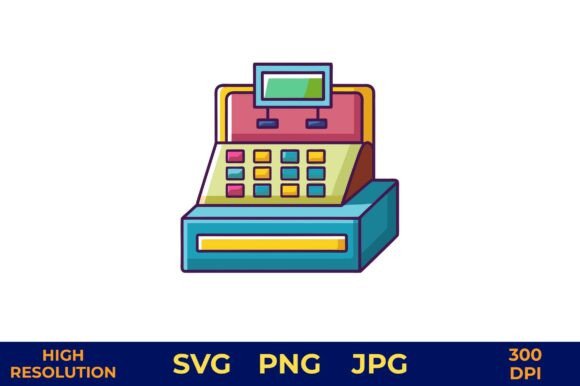
When I scroll through new Illustrations and Graphics looking for that next big thing to add to my library, I am usually hunting for something with immediate character. You know the type—it needs to pop off the fabric, hold up under a needle, and look expensive enough to justify a premium price tag on an Etsy listing or a local craft fair booth. Recently, I came across the Retro Cash Register Illustration, and it immediately caught my eye. It isn’t just another generic icon; it is a colorful vintage cash register illustration with buttons and display screen, rendered in a retro commerce machine vector design style. But does it translate well from a digital file to a stitched embroidery project? Let’s dig into the practical details.
First Impressions: Mood and Visual Personality
The moment you load this design into your embroidery software, the mood is set. This isn’t a sterile, modern minimalist graphic. It feels nostalgic, warm, and slightly playful. The color palette of the original vector—likely vibrant reds, chrome silvers, and bright display greens—is designed to grab attention. For a designer, this is crucial because those colors need to survive the translation process. When we talk about a machine embroidery design, we are talking about how thread interacts with light and texture. The bold outlines and distinct shapes of the cash register suggest that this will stitch cleanly, provided we pay attention to the details.
The layout is centered and balanced, which makes it incredibly versatile. It doesn’t feel cramped. The "buttons" and "display screen" elements offer natural focal points where we can use different stitch types to create visual interest. It screams "small business," "retail," or "finance-themed humor," making it a perfect fit for a wide range of audiences, from accountants who love a good joke to vintage shop owners branding their boutique.
Real-World Application: Where Does This Shine?
I have been thinking about how to best utilize the Retro Cash Register Illustration in actual production. My first instinct was to visualize it on a heavy-duty canvas tote bag design. There is something inherently commercial about a cash register, and pairing that imagery with a tote bag creates a cohesive narrative for anyone running a small shop. Imagine a custom embroidered patch on the front pocket of a denim apron, or a large, vibrant print on the chest of a unisex sweatshirt. The sweatshirt embroidery potential here is high because the bold lines will stand out against cotton fleece without getting lost in the nap of the fabric.
Another strong contender for this design is baby items. We often see "little boss" or "future entrepreneur" themes in nursery decor. Placing this embroidery file on a soft muslin onesie or a hooded towel could be a hit for gender-neutral baby showers. The rounded edges of the vintage register illustration soften the concept of money, making it friendly and approachable for a child’s garment. It transforms a symbol of commerce into a cute, decorative element.
For the Etsy seller or craft business owner, this design also offers excellent utility as a printable mockup asset. Before you even commit to stitching, you can use the high-quality SVG and PNG files to create digital previews. Showcasing the Retro Cash Register Illustration on a virtual tea towel or a kitchen wall hanging helps buyers visualize the final product. It bridges the gap between the digital purchase and the physical reality, increasing buyer confidence and engagement.
Technical Considerations and Stitching Strategy
As an experienced reviewer, I cannot stress enough that not every graphic stitches perfectly. The Retro Cash Register Illustration has several distinct elements—the curved top, the rectangular base, the grid of buttons—that require thoughtful digitizing or careful selection of stitch types. If you are using a pre-digitized version, you must check the stitch density. Dense fill stitches on the main body of the register will give it a plush, raised look, but if the density is too high, the fabric may pucker, especially on lighter materials like linen or thin cotton blends.
For the smaller details, such as the numbers on the display screen or the individual buttons, a combination of satin stitch and running stitch might be necessary to maintain clarity. If the details are too fine, they may blur together when stitched, turning into a muddy blob rather than a crisp illustration. This is why testing on scrap fabric is non-negotiable. You need to inspect small details closely to ensure they remain legible after the thread tension is applied.
Fabric choice plays a massive role in the final aesthetic. On a dark fabric, the vibrant colors of the design will pop dramatically, creating a striking contrast. However, if you are working with textured fabrics like burlap or thick wool, the definition of the vector lines might get lost. In these cases, a solid backing stabilizer is essential to prevent the fabric from distorting under the needle. Also, consider the thread colors carefully. While the original vector might use specific shades, you may need to swap out certain threads to achieve better contrast against your chosen background material.
Where to Exercise Caution
While this design is robust, there are situations where it might not perform its best. Avoid attempting this on highly stretchy fabrics without proper stabilization, as the hoop size required for the full illustration could cause distortion. Similarly, if you are planning to embroider this on a curved surface like a baseball cap, the flat nature of the vector might look distorted unless the design is specifically adapted for curvature. Tiny lettering, if present in any accompanying text, should be scrutinized; anything smaller than 0.5 inches in height risks becoming unreadable after washing.
Furthermore, if you are producing items that will undergo frequent washing, such as kitchen towels or baby clothes, ensure that the thread colors are colorfast. Bright reds and blues can sometimes bleed if not treated correctly. The durability of the finished product relies heavily on the quality of the thread and the stability of the stitch placement.
Final Verdict: A Strong Asset for Creative Entrepreneurs
Overall, the Retro Cash Register Illustration is a standout piece in the Illustrations category. It brings a sense of fun and professionalism that is rare to find in stock graphics. It works beautifully for personalized gifts, adding a touch of humor and nostalgia to everyday items. For the commercial embroidery market, it offers a versatile theme that can be adapted to various products, from apparel to home decor.
Before you dive into production, remember to confirm the licensing terms. Ensure that you have the right to sell finished items created with this design, especially if you are using it for small shop product lines. Check whether the included SVG, PNG, and JPG files meet your resolution needs for both digital marketing and physical printing. By taking the time to test the design, review the stitch density, and choose the right fabrics, you can turn this simple vector into a high-value handmade product that customers will love. It is a smart addition to any designer’s toolkit, blending retro charm with modern versatility.